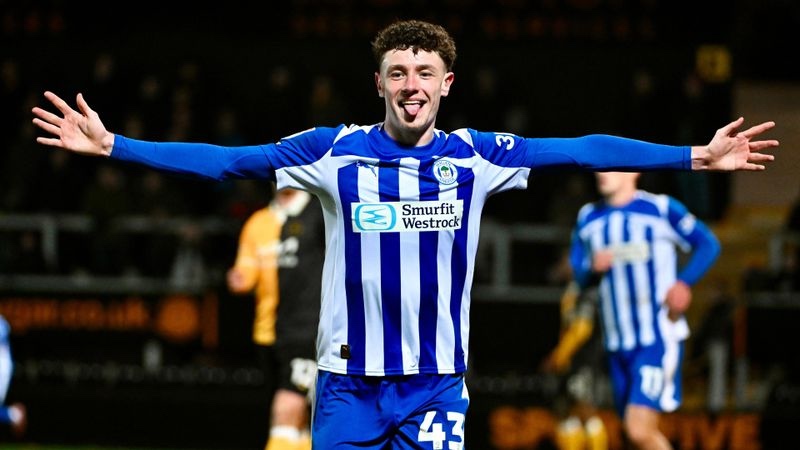
Harrison Bettoni made the breakthrough at the Pirelli Stadium. Photo courtesy of Wigan Athletic
- Wigan Athletic got back to winning ways with a 2-0 victory against Burton Albion at the Pirelli Stadium.
- The confident Brewers had defeated Northampton Town 5-1 on Boxing Day but Latics burst their bubble with two second half goals.
- Latics went ahead on 64 minutes when 18-year-old Harrison Bettoni headed home his third goal of the season from Joe Hungbo’s cross.
- The visitors doubled their lead on 87 minutes when Dara Costelloe finished into the bottom right corner for his second goal of the season.
- Latics move up to 12th place and the Brewers drop to 18th place in the League One table.
Ryan Lowe made four changes to the Latics XI from the defeat at Bradford on Boxing Day with Tyrese Francois, Tobias Brenan, Joe Hungbo and Costelloe starting.
Both teams had good chances to score in the first six minutes.
Hungbo’s left-sided cross was almost back-heeled home by Costelloe, before Francois fired his strike just over the crossbar from the edge of the box.
At the other end Sam Tickle made a good save to deny Tyrese Shade.
Bettoni was the next to go close for the visitors in the 13th minute, his strike had Brad Collins beaten but came back off the post.
Then on 19 minutes Tickle came to Latics’ rescue with a vital save.
Former Blackpool striker Jake Beesley looked odds on to score but the Tics goalkeeper did brilliantly to block the striker’s effort from point-blank range.
Worryingly Latics kept conceding set-piece situations on which the Brewers usually thrive. Alex Hartridge peppered the visitors penalty box with numerous long throws but the defence held firm.
Costelloe had the final chance of the first half from the edge of the area but his strike was comfortably saved by Collins.
An even first half with chances not taken at both ends.
It was a scrappy opening to the second half with both sides conceding possession.
Latics then threatened on 51 minutes. A Morgan Fox throw came to Callum Wright, whose volley was straight at Collins.
Bettoni was showing some good touches down the wing. One brilliant run down the right and through ball almost had Raphael in on goal, but Collins recognised the danger and was off his line quickly to snuff out the danger.
Latics made the breakthrough on 64 minutes. Hungbo drove down the left-hand side, and his deep cross was headed home at the far post by Bettoni for his third goal of the season.
Christian Saydee replaced Brenan on 67 minutes and Kgaogelo Chauke fired over for the hosts on 77 minutes.
Fraser Murray replaced Bettoni on 81 minutes.
The Brewers then had a glorious chance to draw level on 87 minutes but Kyran Lofthouse headed just wide of the post.
The points were sealed for Latics moments later when striker Costelloe scored only his second goal of the season.
Substitute Murray lifted a ball over the Brewers’ defence, and Costelloe produced a composed finish into the bottom right corner.
Latics will want to try for back-to-back wins when they face Barnsley at the Brick on New Year’s Day.
Overview
This was an important confidence boosting victory for Lowe’s men after the two recent defeats.
Both sides had good chances in the first half and Latics had to contend with numerous Burton throw-ins and corners.
They defended resolutely, but could they find the cutting edge that has been missing for most of the season?
On this occasion they found the back of the net with the exciting prospect Bettoni heading home, before the out of form Costelloe finally managed to get his name on the scoresheet.
Lowe’s men had once again battled hard, but the difference was that this time they were able to convert some of their chances.
Latics are a workmanlike outfit and similar to many teams in a very average division (only three points separate ninth and 21st place) but if they can find some quality reinforcements in the transfer window they might still make a run for the playoffs.
Post-match comments
Afterwards Lowe was made up for the players, staff, and supporters.
“I am really pleased, and buzzing with the result,” he told the media.
“We knew it was going to be ugly at times – fair play to Gary (Bowyer), as that’s how he sets up his teams.
“I thought we could’ve been 2-0 up at half time, but I’ve got belief in the group, and I’ll always stick with them.
“Dara (Costelloe) has been through a tough time not scoring any goals, and we put belief in an 18-year-old kid.
“I thought we were fantastic without the ball, and I cannot fault the lads’ belief, desire, and determination to come here and get a result, as it’s not an easy place to come.
“When the lads perform like that, the credit goes to the players. We give them the game plan, and it’s up to them to take it into fruition.
“I’m buzzing for the lads, and for the away fans because they’ve certainly gone home happy tonight.”
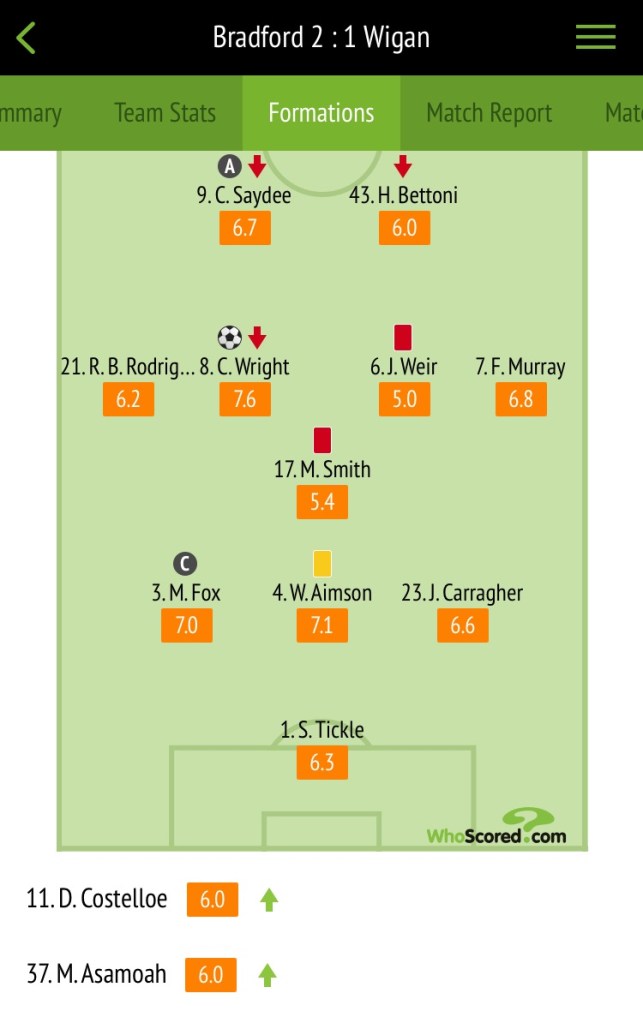
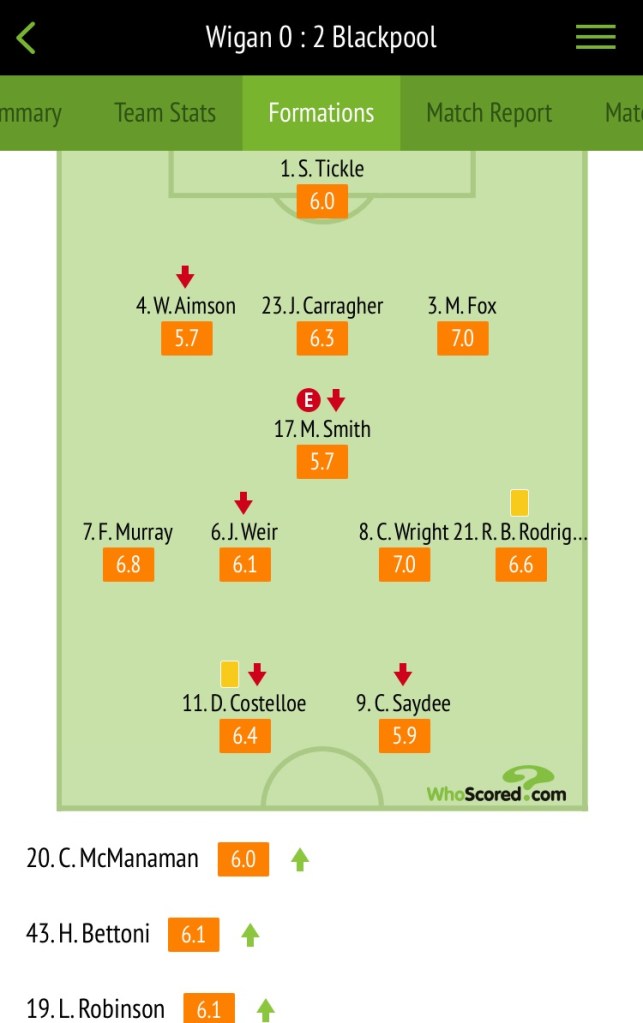
Player ratings
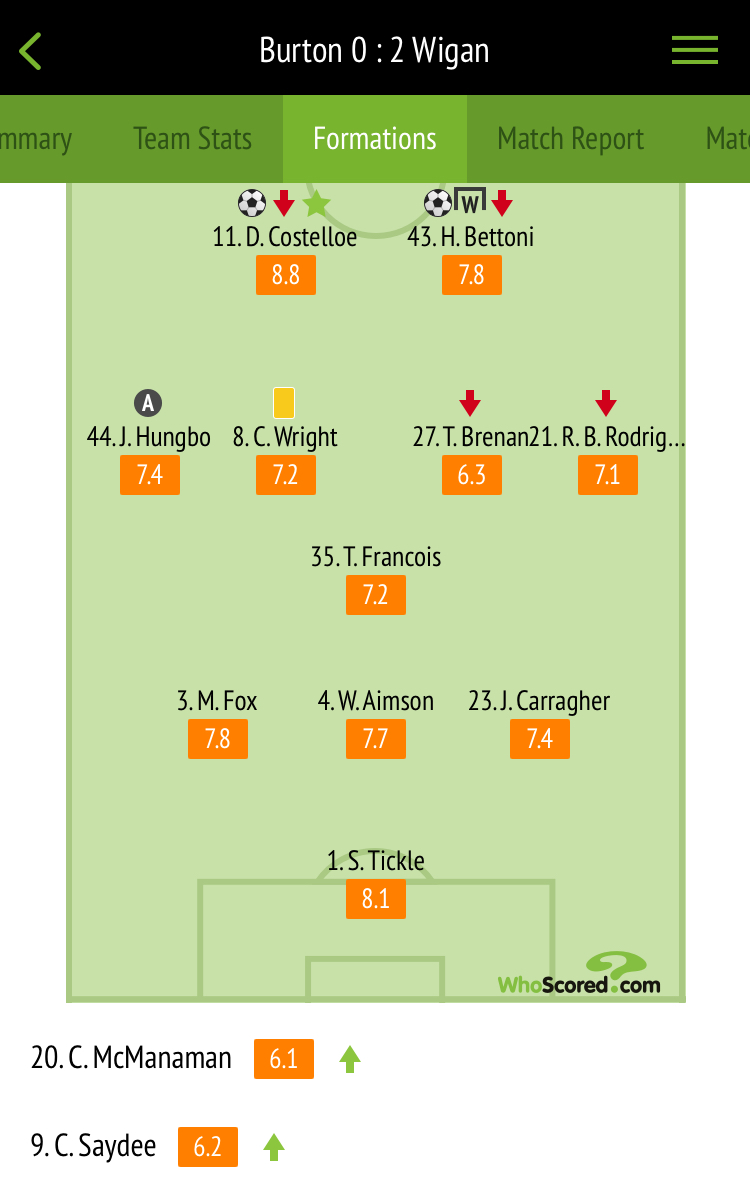
Player ratings courtesy of Whoscored.com


 Latics News 24/7
 Let's Hang On