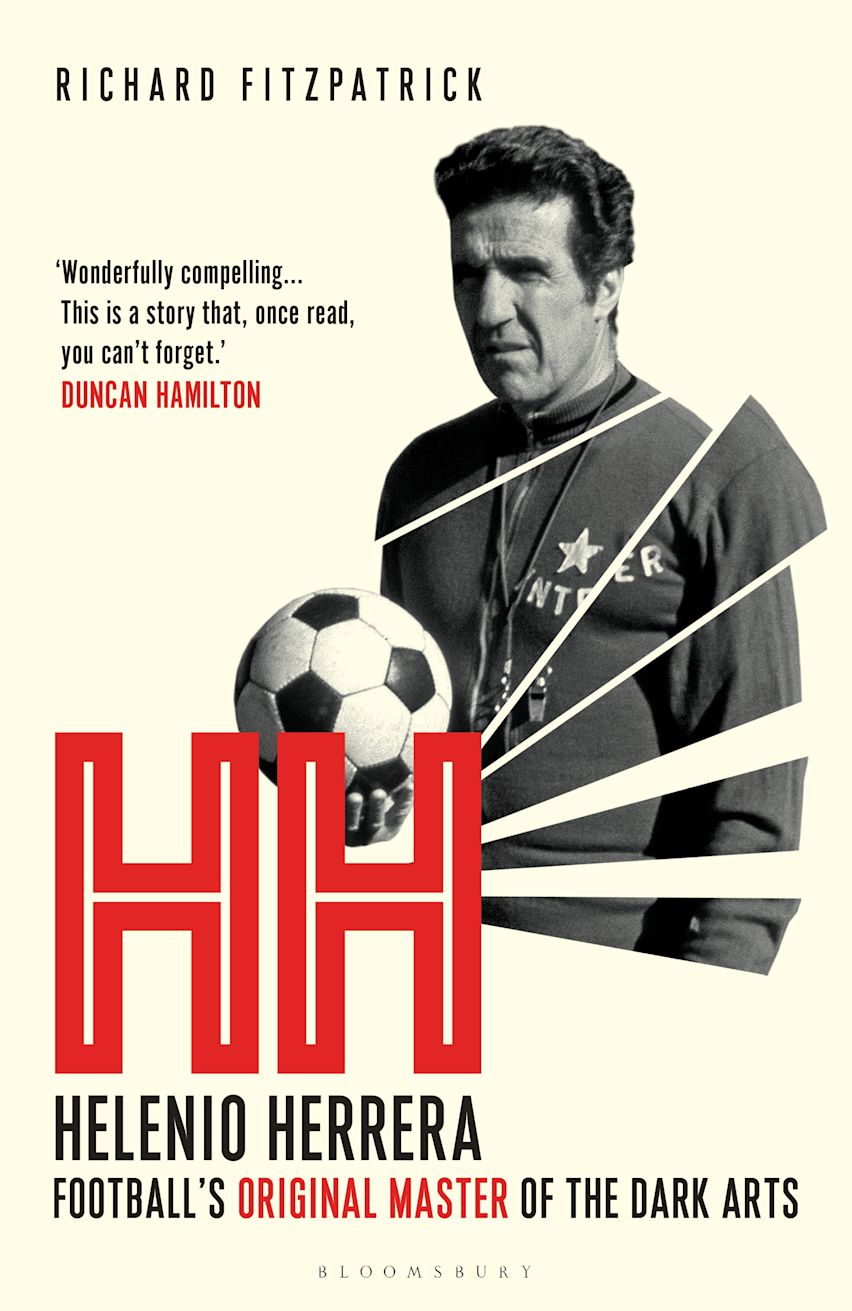
Richard Fitzpatrick has produced a fascinating biography of Helenio Herrara, one of the most enigmatic, successful and yet disturbing characters in European football.
Herrara had an almost mythic existence: a poverty-stricken childhood; he nearly died from diphtheria; he may have come from Buenos Aires or Casablanca; he said he was born in 1910 but after his death it was it was revealed he was born in 1916.
HH played for eight or nine clubs in France and fathered multiple children with different partners. As a coach Herrara won La Liga twice with both Atletico Madrid and Barcelona, but it was his move to Inter Milan in 1960 that propelled him to stardom.
Fitzpatrick believes that HH was football’s first celebrity coach. He was the bridge between the days of working-class coaches and the millionaire managers of the modern era. He used every tactic possible to big up his players and boost their confidence.
Many people compare him to José Mourinho as he was known for being a charismatic, yet manipulative, outspoken figure who made managers central to team success for the first time.
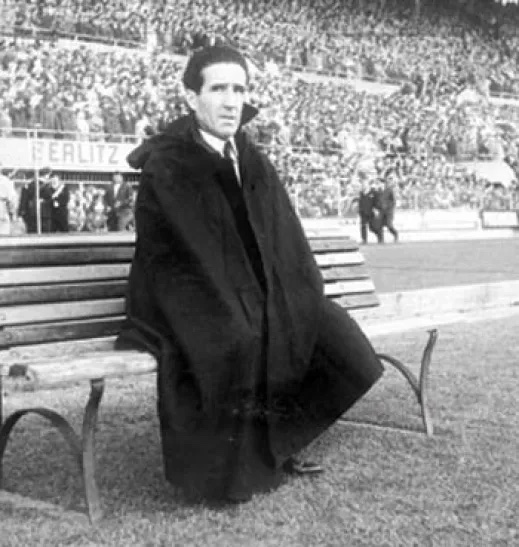
HH is regarded as the original master of the dark arts. While not the inventor, Herrera perfected Catenaccio (the “door-bolt” system) at Inter Milan, leading them to two consecutive European Cups (1964, 1965) and three Serie A titles.
Contrary to some views of his tactics being purely defensive, his teams were known for lightning-fast counterattacks and intense fitness, which he demanded from his players.
Herrera ran a “regime of performance-enhancing drugs” (amphetamines) in Spain and Italy, which players sometimes hid under their tongues to avoid detection, according to interviews with former players.
Nicknamed “Il Mago” (The Wizard), HH was a pioneer in sports psychology, using motivational slogans like “Taca la bala” (attack the ball) and engaging in deep psychological warfare, including “ritiro” (pre-match hotel lock-ups) to maintain strict control.
Fabio Capello, the former England manager, played under HH at AS Roma from 1968 until 1970. Capello was HH’s lieutenant on the pitch. He gave Capello great self-belief, the idea that he should never fear an opponent. Capello commented,
“He changed football in Italy in his era. His teams played with greater speed, with original ideas. He did things differently to any of the other coaches I worked with. He was 10 years ahead of them in his thinking. He was more forward-thinking, an innovator. He got players to interchange positions. He was great at getting the team moving without the ball.”
“His training sessions were very demanding. Everything was done at pace. He had lots of energy. He always held to his belief, his mantra: ‘As we train, so we play’ – if you maintain high standards, things will go well. It stuck with me. With other coaches, training was more relaxed.”
He was a man of contrasts: a devout practitioner of yoga for 50 years, yet a violent man, who allegedly attacked a fan and was a known philanderer. His career was affected by the 1969 death of Roma striker Giuliano Taccola, who died of heart failure after being forced to train despite being ill, leading to a manslaughter trial against Herrera. He was not convicted but his reputation had been damaged.
Herrera is not particularly well known in England but Fitzpatrick’s compelling book about this extraordinary character deserves to be read by a wide audience.
HH: Helenio Herrara Football’s Original Master of the Dark Arts by Richard Fitzpatrick. Published by Bloomsbury Sport. Price £20.
This review first appeared in the July/August 2026 edition of Late Tackle magazine.

 Latics News 24/7
 Let's Hang On